
Chrysler Brake Service: Protect Every Mile You Drive
Your Chrysler's braking system works every time you slow down, stop at an intersection, or react to an unexpected obstacle. Whether you're driving through downtown Turlock, commuting on Highway 99, or taking longer road trips across California, dependable brakes are essential for your safety and your passengers' peace of mind.
Because brake components wear gradually, many drivers don't realize there's a problem until they hear grinding noises or notice longer stopping distances.
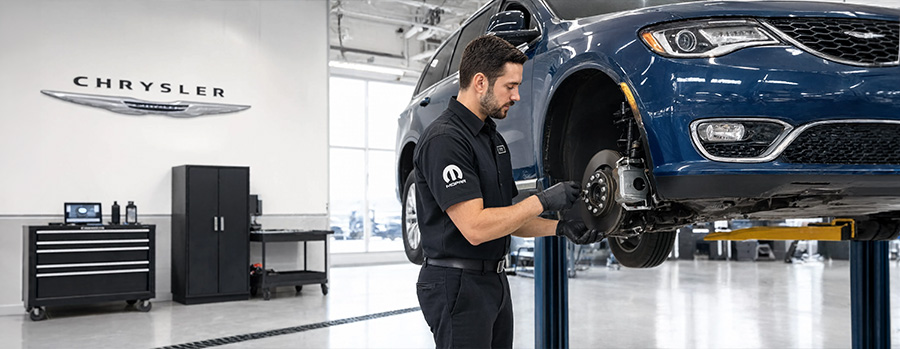
At Turlock CDJR, we strive to make Chrysler service easy and effortless. Routine Chrysler Brake Service helps identify worn parts early, preventing more expensive repairs while keeping your vehicle performing the way it was designed.
Why Brake Service Is More Important Than You Think
Every time you press the brake pedal, your brake pads create friction against the rotors to slow down your vehicle. Over thousands of miles, that friction naturally wears the pads down. If they aren't replaced in time, the metal backing can begin grinding against the rotors, causing damage that is far more expensive than replacing the pads alone.
Your braking system also includes calipers, brake fluids, hoses, hardware, and electronic safety systems. If any of these components fail, braking performance can suffer. Regular inspections ensure that every part of the system is working together properly.
Signs Your Chrysler May Need Brake Service
Most brake problems develop gradually, giving you plenty of warnings before they become serious. If you notice any of these symptoms, it's time to schedule a brake inspection:
- Squealing or grinding noises while braking
- A soft or spongy brake pedal
- Vibrations when applying the brakes
- The vehicle pulling to one side
- Increased stopping distance
- A brake warning light on the dashboard
- A burning smell after heavy braking
Ignoring these warning signs can lead to additional wear on the rotors, calipers, and other braking components, increasing repair costs over time.
How to Replace Brake Pads
Many DIY enthusiasts search for how to replace brake pads, and while the process appears straightforward, modern braking systems require careful attention to detail and the proper tools.
The basic replacement process involves:
1. Lift the vehicle safely, then remove the wheel.
2. Remove the brake caliper to access the brake pads.
3. Taking out the worn pads and inspecting the brake rotor for damage or excessive wear.
4. Compress the caliper piston, then install the new brake pads.
5. Reassembling the brake components using the correct torque specifications.
6. Press the brake pedal several times before driving to restore proper brake pressure.
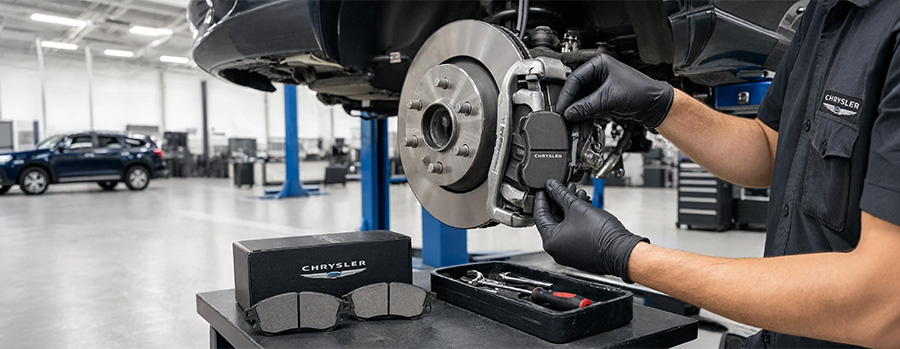
Although these are the general steps, today's Chrysler vehicles often include electronic parking brakes, ABS sensors, and advanced safety technologies that require proper handling. Incorrect installation can reduce braking performance or trigger warning lights, making professional service the safest option for most drivers.
Should Brake Rotors Be Replaced Too?
Brake pads and brake rotors wear together, but they don't always need replacement at the same time. During a brake inspection, technicians measure rotor thickness and check for excessive wear, heat damage, grooves, or warping.
If the rotors remain within factory specifications, they may continue to provide reliable performance with new brake pads. However, severely worn or damaged rotors should be replaced to ensure smooth braking, minimize vibration, and help the new brake pads wear evenly. Replacing both components, when necessary, can improve stopping performance and extend the life of your new brake pads.
How to Change a Brake Light
Drivers also frequently search for how to change a brake light, especially after noticing that one of the rear brake lamps has stopped working.
Replacing a brake light bulb is usually a simple process. After turning off the vehicle, you'll access the rear light assembly through the trunk or interior access panel, remove the old bulb, install the correct replacement, and verify that the brake light operates properly.
It's important to remember that a burned-out brake light is different from the brake warning light on your dashboard. If the dashboard warning light stays illuminated, the issue may involve low brake fluid, worn brake pads, the anti-lock braking system, or another component of the braking system that requires professional diagnosis.
Why Genuine Chrysler Brake Parts Make a Difference
Your Chrysler's braking system was engineered to operate with components that meet precise factory specifications. Genuine Chrysler brake parts are designed to provide the correct fit, dependable stopping power, and compatibility with your vehicle's electronic safety systems.
Using high-quality replacement parts also helps reduce brake noise, promotes even pad wear, and delivers the braking performance Chrysler intended. Combined with factory-trained installation, genuine components help provide confidence every time you press the brake pedal.
What to Expect During Chrysler Brake Service
A professional brake service is about much more than replacing worn pads. Technicians perform a comprehensive inspection of the entire braking system, evaluating brake pad thickness, rotor condition, caliper operation, brake fluid, hoses, and hardware. If any components show signs of excessive wear or damage, you'll receive recommendations based on your vehicle's condition rather than a one-size-fits-all repair.
Routine brake inspections also allow technicians to catch small problems before they become costly repairs, helping you maximize the life of your braking system while maintaining safe stopping performance.
Schedule Chrysler Brake Service at Turlock CDJR
If your Chrysler has begun making unusual brake noises, the brake warning light has appeared, or your vehicle simply feels different when stopping, don't wait until a minor issue becomes a major repair.
At Turlock Chrysler Dodge Jeep Ram, our factory-trained technicians provide thorough brake inspections and professional Chrysler brake service using quality replacement parts designed for your vehicle. Whether you need new brake pads, rotor replacement, brake fluid service, or a complete brake system inspection, our team is here to help keep you driving confidently throughout Turlock and wherever the road takes you.